AWID 26-Bit Compatible Cards: Complete Buyer's Guide
If your building or gated property uses AWID readers and you need replacement access cards, the most important thing to understand is this: AWID and HID are both 26-bit proximity formats, but they are not interchangeable. AWID uses a proprietary card-to-reader air interface that HID cards cannot satisfy, and vice versa. American Key Cards supplies AWID 26-bit compatible clamshell cards and key fobs directly — programmed to your facility code and card number range, with no dealer account or minimum-order commitment required.
What Is the AWID 26-Bit Format?
AWID stands for Applied Wireless Identifications Group, a proximity credential manufacturer whose reader and card systems are widely installed in North American commercial buildings, gated residential communities, and parking facilities. The AWID 26-bit format is the most common credential variant in their product line.
Technically, the format operates at 125 kHz and outputs a standard 26-bit Wiegand data stream to the access control panel — the same electrical signal structure used by HID, Indala, Kantech, and dozens of other brands. The facility code field supports values from 1 to 255; the card number field supports values from 1 to 65,535.
What makes AWID credentials distinct is the air-interface encoding — the radio protocol that the card uses to communicate with the reader before the reader sends data to the panel. AWID’s encoding is proprietary. An HID ProxCard and an AWID card both produce a 26-bit Wiegand signal when read by their respective readers, but neither card will be recognized by the other manufacturer’s reader. The incompatibility is at the RF layer, not at the panel.
This is frequently the source of frustration for property managers who order “standard 26-bit proximity cards” and find they don’t work. If your readers are AWID, you need AWID-format cards — and the AWID 26-bit format is what American Key Cards produces and programs.
AWID OEM Part Numbers
AWID proximity credentials were sold under several OEM part numbers. The most common are:
| OEM Part Number | Form Factor | Notes |
|---|---|---|
CS-AWID-0-0 | Clamshell proximity card | Standard drop-in replacement card |
GR-AWID-0-0 | ISO printable card | Printable PVC for photo ID or branding |
AW-PROXLINC-CS | Clamshell card (ProxLinc series) | AWID ProxLinc clamshell variant |
AW-PROXLINC-GR | ISO graphics card (ProxLinc series) | AWID ProxLinc printable variant |
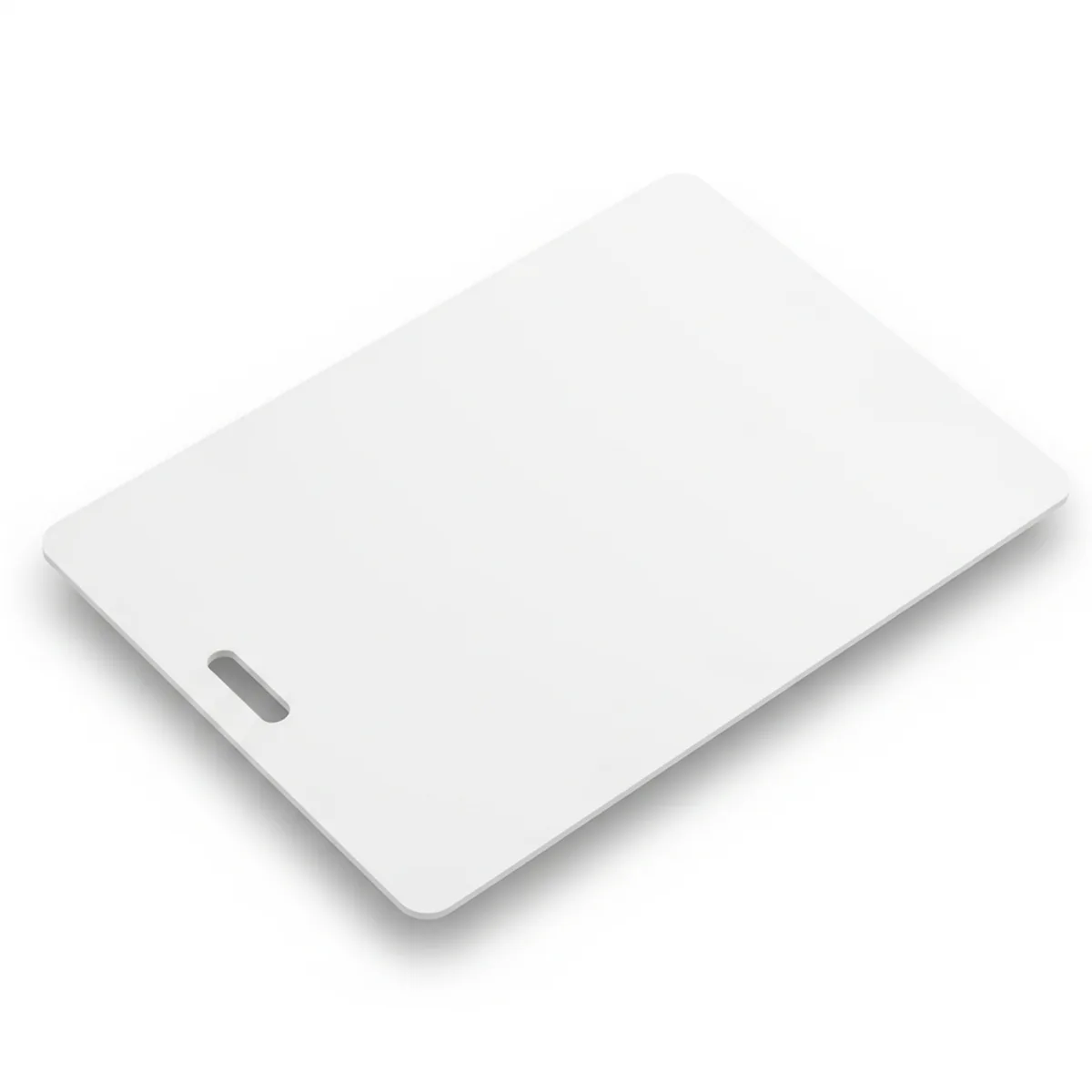
American Key Cards produces compatible replacements for the CS-AWID-0-0 clamshell and the GR-AWID-0-0 ISO card form factors. Our cards use the same AWID 125 kHz air-interface encoding and output the same 26-bit Wiegand data stream. We are not affiliated with AWID or HID Global — we produce credentials compatible by specification with the OEM product.
How to Identify an AWID Reader
Before ordering, confirm that your readers are in fact AWID-format readers and not a different brand that happens to look similar. The reader model number is the most reliable identifier.
AWID readers that use the AWID 26-bit format include:
AWID SP-6820— standard outdoor proximity reader, very common in commercial buildingsAWID SR-2400— surface-mount proximity readerAWID KP-6840— keypad proximity reader combinationAWID MM-6800— mullion-style proximity reader for narrow door framesAWID SR-6500— short-range proximity reader
The model number is typically printed on a label on the back of the reader or on a sticker visible when the reader is removed from its mounting. The AWID logo is often molded into or printed on the reader face.
Note that some AWID readers are sold OEM-labeled under other brands — most notably DoorKing, which sells the AWID MM-6800 as its 1815-282 reader and the AWID SP-6820 as its 1815-281. If your property has a DoorKing gate system using 1815-series readers, see our DoorKing DKProx format guide for specifics on that product line — the underlying format is identical.
AWID 26-Bit vs. Standard HID 26-Bit: Side-by-Side
The table below shows exactly where AWID and HID 26-bit are the same and where they differ. Both are 26-bit Wiegand systems, but reader-level compatibility requires the matching air interface.
| Property | AWID 26-Bit | HID H10301 (Standard 26-Bit) |
|---|---|---|
| Frequency | 125 kHz | 125 kHz |
| Air-interface protocol | AWID proprietary | HID proprietary |
| Wiegand output format | 26-bit H10301-equivalent | 26-bit H10301 |
| Facility code range | 1–255 | 0–255 |
| Card number range | 1–65,535 | 0–65,535 |
| Works in AWID readers | Yes | No |
| Works in HID ProxPro readers | No | Yes |
| Encrypted | No | No |
| Cloneable from known data | Yes | Yes |
For a deeper look at why these two formats are incompatible at the reader level despite identical panel output, see our AWID 37-bit format guide which covers the extended AWID variant used in larger deployments.
Can AWID 26-Bit Cards Be Cloned?
Yes, with one important clarification. Standard AWID 26-bit credentials are 125 kHz proximity cards with no cryptographic layer. The facility code and card number are stored in plain form on the chip’s memory. Using commercially available RFID tools — Proxmark3 and compatible devices, or a T5577 programmable blank — the card data can be read and transferred to a new chip with the AWID encoding.
What this means practically is that producing a compatible AWID card requires knowing the facility code and card number, nothing more. There are no encryption keys, no certificate chains, and no proprietary signing process. This is identical to the security posture of standard HID H10301, EM4100, and most other 125 kHz proximity formats — formats designed before cryptographic access credentials became standard.
For most apartment complexes, office buildings, and gated communities, this has been the accepted security model for decades. If your organization requires clone-resistant credentials, AWID’s reader infrastructure can be upgraded, but the AWID 26-bit credential itself does not provide that protection.
This also means American Key Cards can produce fully compatible replacement cards from your facility code and card number data alone, with no need to present an existing card or negotiate with the original installer.
Compatible Readers and Access Panels
AWID 26-bit cards work with any reader or access panel in the AWID reader family, and because the Wiegand output from an AWID reader to its controller is standard 26-bit, they also function on virtually any access control panel configured to accept 26-bit Wiegand input.
Confirmed compatible AWID readers:
AWID SP-6820,SR-2400,SR-6500AWID KP-6840keypad readerAWID MM-6800mullion reader- DoorKing
1815-281and1815-282(OEM-labeled AWID readers)
Access panel compatibility: Any panel with a Wiegand 26-bit input — including Keri Systems PXL and NXT controllers, Identiv multi-tech panels, and generic Wiegand-input controllers — will accept the 26-bit data stream that an AWID reader outputs when it reads an AWID-format card.
Common Use Cases for AWID 26-Bit Credentials
AWID reader systems are particularly concentrated in:
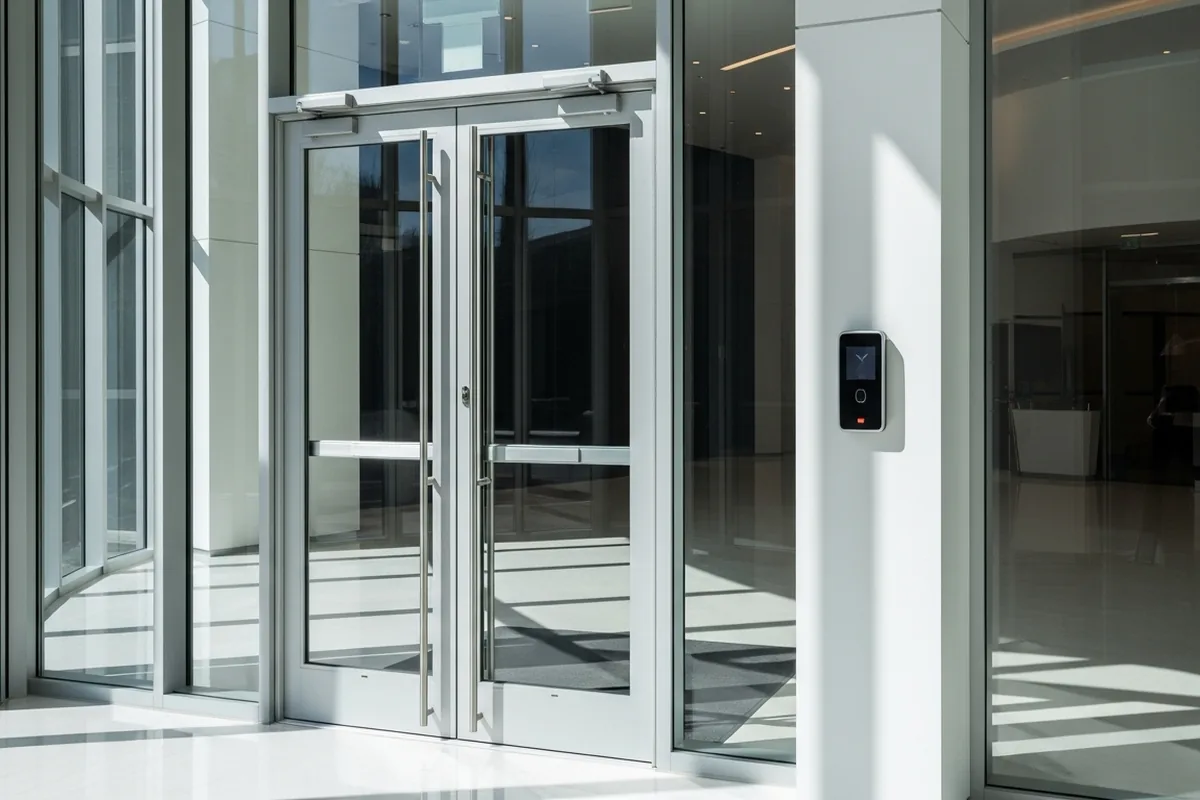
- Commercial office buildings — AWID was widely specified in the 1990s and 2000s for commercial access control, and many of those installations are still active
- Multi-tenant apartment complexes — AWID SP-6820 and SR-2400 readers are common at building entries and amenity areas
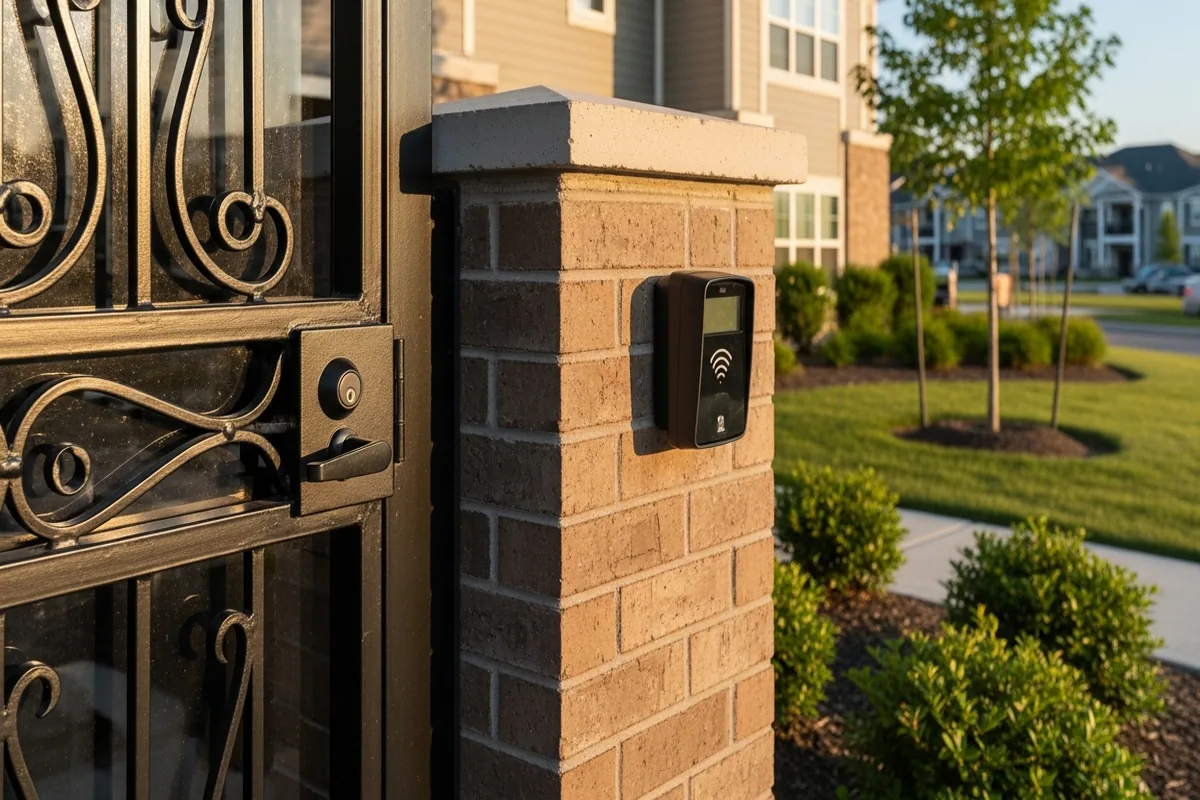
- Gated residential communities and HOA gates — often using DoorKing controllers with AWID-labeled or OEM-labeled AWID readers
- Parking facilities — AWID credentials are frequently used at parking garages with vehicle gate entry
The format’s prevalence in legacy installations means property managers frequently need to reorder replacement credentials for tenants or employees who have lost cards, for new residents moving into a building, or for periodic re-keying programs.
How to Find Your Facility Code
Every AWID 26-bit card is programmed with two values at manufacture: a facility code and a card number. You need both to order replacement cards.
Where to find your facility code:
- Look at an existing card. The facility code and card number are often printed on the card face or a label on the reverse. On AWID clamshell cards, look for a number pair printed in small text — the smaller number is typically the facility code.
- Check original installer documentation. The installer who commissioned your AWID system should have recorded the facility code. Property management files from when the system was installed often include this.
- Access your access control software. If you have a Wiegand-compatible access panel with software (Keri Systems, Identiv, or a generic controller), the credential database will show enrolled card data including facility code.
- Read an existing card. An RFID reader tool that supports the AWID encoding can read the facility code and card number off any working card in your system.
If you are unable to locate your facility code, contact us before placing an order — we can advise on the options available to recover or verify it.
Why Aftermarket AWID Cards Cost Less Than OEM
AWID proximity credentials are a legacy format. The physical credential — a 125 kHz RFID coil embedded in a PVC card body — is a mature, commodity technology. The card itself carries no encryption, no proprietary programming, and no licensing mechanism that restricts who can produce it.
What kept OEM pricing elevated was distribution: AWID credentials have historically been available primarily through authorized integrator and dealer channels, with minimum order quantities and account requirements that don’t suit a property manager who needs twelve cards for a new move-in batch.
American Key Cards bypasses that channel. We program AWID-format 125 kHz credentials directly and ship to end users in any quantity. The credential you receive is compatible by specification — same frequency, same air-interface encoding, same 26-bit Wiegand output to your panel, same read range. The difference is the price and the absence of dealer markup.
What to Have Ready When Ordering
When you contact us for AWID 26-bit cards or fobs, have the following information ready:
- Your facility code (1–255)
- The card number or card number range you want programmed (1–65,535)
- Quantity needed — cards, key fobs, or both
- Whether you need sequential numbering or specific card numbers
- Any label printing requirements (facility code, card number, or custom text on the card face)
Orders are programmed to your specification before shipping. If you need cards with the facility code and card number printed on the label in a specific format, note that in your inquiry.
Ready to Order?
If you manage a property with AWID readers and need replacement clamshell cards or key fobs, American Key Cards can ship programmed credentials directly to you — no dealer account, no high minimums, no waiting on an integrator’s schedule. Have your facility code and card number range ready and contact us to place an order or request a quote.
We also supply credentials for closely related formats. If your property has a mixed installation or you are unsure which AWID format variant your system uses, see our AWID 37-bit format guide for the extended bit-format variant used in larger deployments.
Frequently asked questions
Will a standard HID ProxCard work in an AWID reader?
No. HID and AWID both output 26-bit Wiegand data to the access panel, but the radio encoding between card and reader is proprietary to each manufacturer. An HID ProxCard placed in front of an AWID SP-6820 or SR-2400 reader will produce no response. You need an AWID-format card with the AWID air-interface encoding.
What information do I need to order AWID 26-bit replacement cards?
You need your facility code (1–255) and the card number range you want programmed (1–65,535). Both values are usually printed on your existing card label or available from the original installer's records. American Key Cards programs each card to your exact facility code and card number before shipping.
Are AWID 26-bit cards cloneable or encrypted?
Standard AWID 26-bit credentials carry no cryptographic protection. The facility code and card number are stored in plain form on the chip and can be read with commercially available RFID tools. This is why aftermarket suppliers can produce compatible cards from your facility code and card number data alone — there are no encryption keys involved.
How do I identify an AWID reader in my building?
Look for the AWID logo on the reader housing, or check for model numbers such as SP-6820, SR-2400, KP-6840, or MM-6800 printed on a label on the reader body or its back plate. The original system documentation from your installer will also list the reader make and model.