AWID vs. HID 26-Bit Proximity Cards: What's the Difference?

AWID and HID both produce 26-bit Wiegand proximity cards that operate at 125 kHz — and yet an HID ProxCard placed in front of an AWID reader will produce no response at all. The reason is the air interface: the radio encoding between card and reader is proprietary to each manufacturer, and AWID and HID use incompatible encoding schemes despite outputting identical data to the access panel. If your building uses AWID readers, you need AWID-format cards, and American Key Cards supplies compatible AWID 26-bit cards and fobs programmed to your facility code without an OEM dealer account.
The Short Version: Same Wiegand Output, Different Radio Encoding
Access control works in two distinct layers. The first is the conversation between the card and the reader — the radio-frequency encoding that the reader uses to wake the card and extract the credential data. The second is the data the reader sends to the access control panel, which follows the Wiegand protocol.
HID Prox (H10301) and AWID 26-bit both use the same Wiegand 26-bit data format for that second layer: one even parity bit, an 8-bit facility code (values 1–255), a 16-bit card number (values 1–65,535), and one odd parity bit. The access panel receives identical data from both reader types. What differs is the first layer — the card-to-reader radio encoding. HID uses HID’s proprietary FSK-based air interface; AWID uses AWID’s proprietary air interface. The reader firmware only knows how to decode its manufacturer’s encoding, so cross-brand cards simply go unread.
This is not a setting or a configuration issue. No firmware update will make an AWID reader accept an HID card. The encoding is implemented in hardware at the chip level.
What AWID 26-Bit Looks Like in Practice
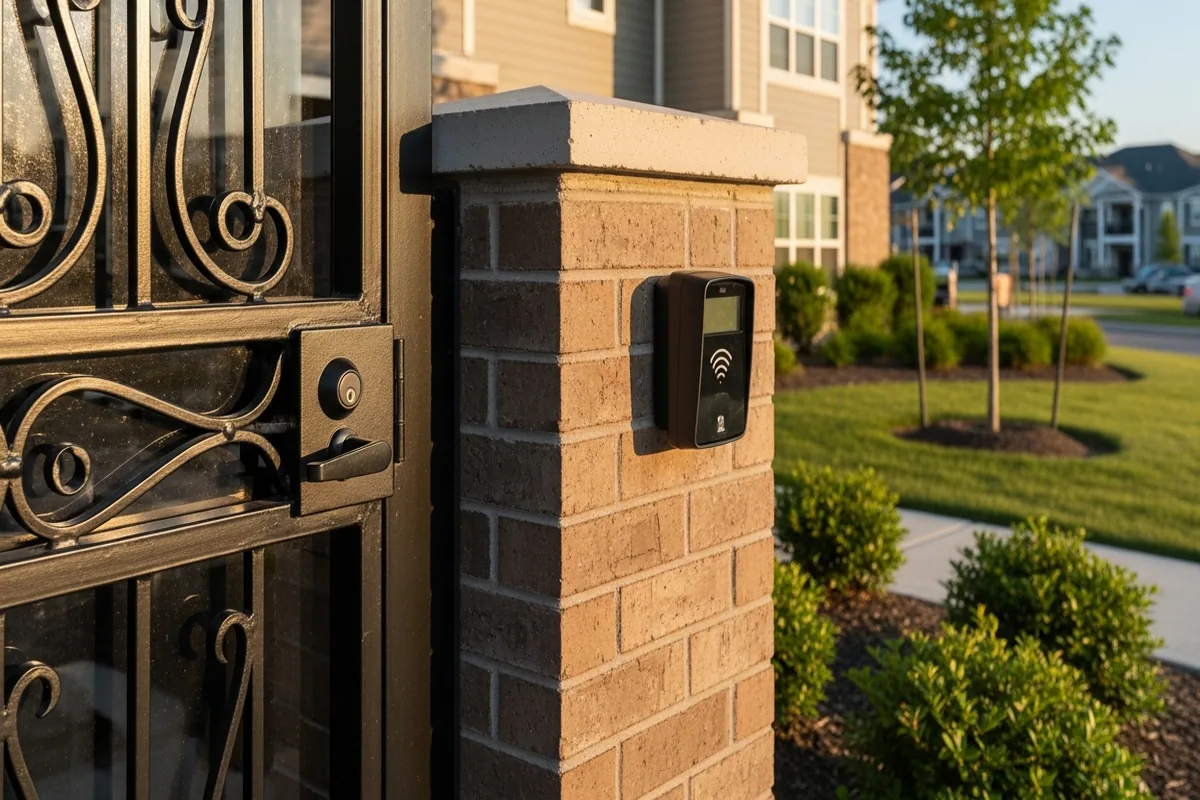
AWID (Applied Wireless Identifications Group) readers are identifiable by the AWID brand name on the reader housing or by model number. The most common reader models in the field are the SP-6820 wall-mount reader, the SR-2400 long-range reader, the KP-6840 keypad reader, and the MM-6800 mullion reader. DoorKing’s DKProx product line (1508 series cards, 1815-series readers) also uses the AWID air interface, which is why DoorKing DKProx cards are not interchangeable with standard HID cards.
The OEM card part numbers for AWID 26-bit include CS-AWID-0-0 (clamshell card), GR-AWID-0-0 (printable ISO card), AW-PROXLINC-CS, and AW-PROXLINC-GR. These are sold through the AWID dealer channel. American Key Cards supplies compatible cards by specification — not affiliated with AWID — using the same AWID air-interface encoding, programmed to your facility code.
AWID vs. HID 26-Bit: Side-by-Side Comparison
| Attribute | AWID 26-Bit | HID Prox H10301 (26-Bit) |
|---|---|---|
| Frequency | 125 kHz | 125 kHz |
| Bit format | 26-bit Wiegand | 26-bit Wiegand (H10301) |
| Facility code range | 1–255 | 0–255 |
| Card number range | 1–65,535 | 0–65,535 |
| Card-to-reader encoding | AWID proprietary | HID proprietary |
| Cloneable / reproducible | Yes (no encryption) | Yes (no encryption) |
| OEM card part numbers | CS-AWID-0-0, GR-AWID-0-0 | 1386, 1326, 1346, 1586 |
| Compatible readers | AWID SP-6820, SR-2400, KP-6840, MM-6800 | HID MaxiProx 5375, ProxPro 5355, MiniProx 5365, ProxPoint Plus 6005 |
| Interchangeable with the other? | No | No |
The Wiegand data row is identical in both columns. Everything that determines whether a card reads or fails lives in the encoding row.
How to Identify Your Reader Brand Before Ordering
Before ordering replacement cards, confirm which reader manufacturer installed your system. The fastest methods:
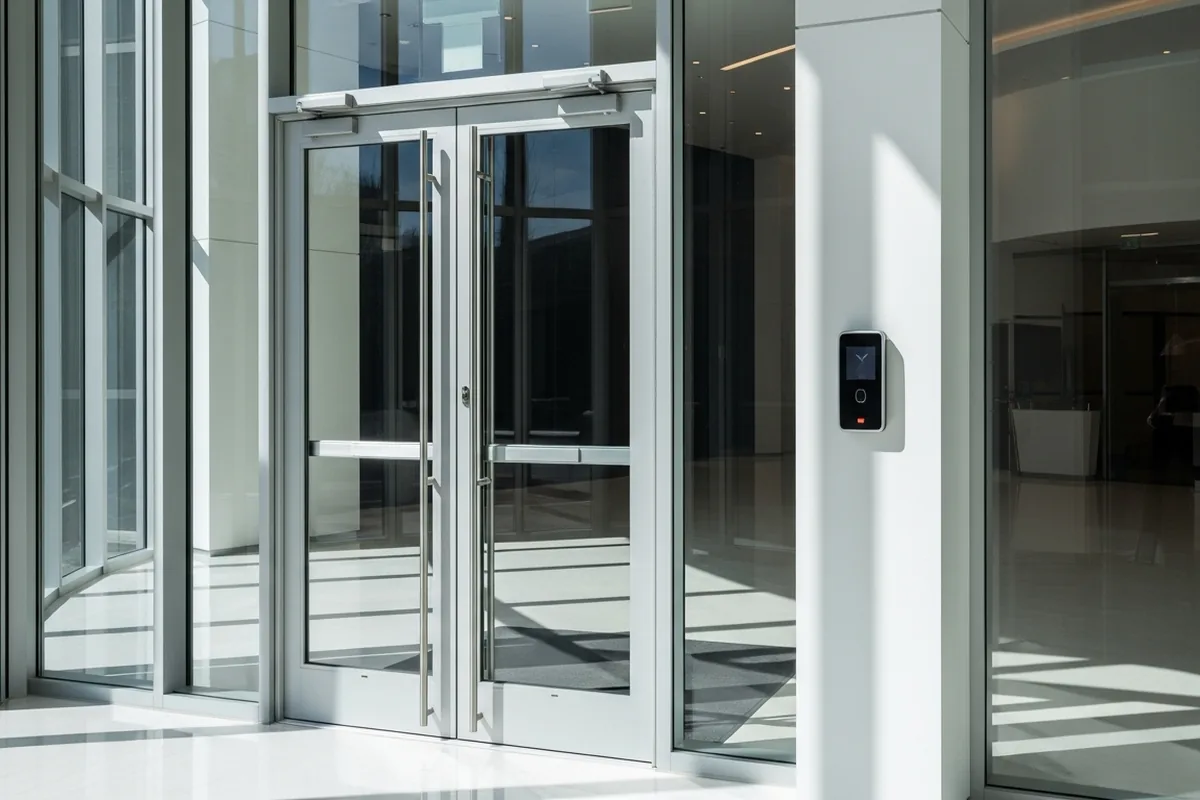
Check the reader housing. Most readers have the manufacturer name or model number on a label on the reader face or back plate. AWID readers show the AWID logo or model numbers beginning with SP-, SR-, KP-, or MM-. HID readers show the HID logo or model numbers beginning with 5 (e.g., 5375, 5355, 5365).
Check your system installer’s documentation. The installation paperwork or system commissioning report will list the reader make and model. Property management offices typically keep this on file.
Check existing cards. The card label on an AWID card may show AWID, Applied Wireless, or simply the facility code and card number without a format indicator. If the card label shows an HID format code (such as H10301) it is an HID card. Blank or unlabeled cards need to be read with an RFID diagnostic tool to confirm the encoding.
If you are unsure after these steps, contact American Key Cards with a photo of the reader and your existing card — we can usually identify the format from the reader model number alone.
Why AWID Cards Are Harder to Source Than HID Cards
HID ProxCard (1386, 1326, 1346) is the most widely available proximity card format in North America. Dozens of aftermarket suppliers globally carry it as a commodity product. AWID, by contrast, is a legacy format with a much smaller aftermarket. Most generic prox card suppliers only stock HID-compatible cards; AWID-format credentials require a supplier that specifically programs the AWID air interface, not just the Wiegand data layer.
This is the core reason property managers with AWID reader infrastructure often end up trying HID cards first, finding they fail, and then searching for an explanation. The failure is not a reader configuration error — it is a fundamental format mismatch.
American Key Cards stocks AWID 26-bit compatible cards and key fobs. We are one of the few non-OEM suppliers that programs the AWID air interface, not just the 26-bit data structure. Cards are programmed to your exact facility code and card number range. There is no minimum quantity requirement, and no dealer account is needed.
AWID 26-Bit and Security: What “Cloneable” Means Here
Standard AWID 26-bit cards carry no encryption. The credential data — facility code and card number — is stored in plain form on the chip and is readable by any RFID tool that supports the AWID air interface. This means compatible cards can be produced from facility code and card number data alone, which is how aftermarket suppliers (including AKC) provide replacements without physically having an existing card.
It also means the credentials can be duplicated by a bad actor with commercially available RFID hardware. For environments where this is a concern, AWID readers are generally not the right long-term platform. Formats using AES-based encryption — such as HID iCLASS SE, HID Seos, or MIFARE DESFire AES — provide genuine clone resistance, but those require reader replacement as well as card replacement, and aftermarket suppliers (including AKC) cannot reproduce those secured credentials. The encryption keys are held by the OEM and cannot be sourced from a third party.
For the many AWID-equipped buildings where reader replacement is not in the budget, compatible 26-bit AWID cards are the practical solution for reordering lost or worn credentials.
Related Formats to Know
If you are working in a building with multiple access systems, or need to confirm you are not looking at a related format, two formats are worth knowing:
The AWID 37-bit format uses the same AWID air interface but outputs a 37-bit H10302-compatible Wiegand stream with no facility code — only a globally unique 35-bit card number supporting over 34 billion unique values. If your AWID system is configured for 37-bit, standard AWID 26-bit cards will not work; the panel will receive data in the wrong bit length.
HID Prox H10301 is the standard 26-bit HID format that AWID is most commonly confused with. Same frequency, same bit format, incompatible air interface. If your readers are HID-branded, you need HID-format cards — not AWID.
Ordering AWID 26-Bit Replacement Cards
To order compatible AWID 26-bit cards or key fobs from American Key Cards, you will need your facility code (1–255), the card number range for the batch, and your preferred form factor — clamshell card, ISO printable card, or key fob. Cards are programmed to order and match your exact credential range. No dealer registration or OEM minimums required.
If you are still uncertain whether your system uses AWID or HID — or if you have a DoorKing gate system and are not sure whether it uses DKProx or a different format — reach out to American Key Cards through the contact page. We will confirm your format and walk you through what to order. Compatible-by-specification credentials, shipped direct.
Frequently asked questions
Why won't my HID card work in an AWID reader?
HID Prox and AWID both deliver 26-bit Wiegand data to the access control panel, but the RF encoding between card and reader is proprietary to each manufacturer. An HID ProxCard presented to an AWID SP-6820 or SR-2400 reader transmits on the HID air interface — the AWID reader cannot decode it and returns no response. You need a card encoded with the AWID air interface.
Are AWID 26-bit cards interchangeable with HID H10301 cards?
No. Despite sharing the same 26-bit Wiegand data structure and the same 125 kHz operating frequency, AWID and HID cards use different proprietary radio encoding protocols. The cards are format-matched to their respective reader families and are not cross-compatible.
Can AWID 26-bit proximity cards be cloned or reproduced?
Yes. Standard AWID 26-bit credentials carry no cryptographic protection. The facility code and card number are stored in plain form and can be read with commercially available RFID tools. Aftermarket suppliers can reproduce a compatible card from your facility code and card number alone.
What information do I need to order AWID 26-bit replacement cards?
You need your facility code (a number from 1 to 255) and the card number range you want programmed (1 to 65,535). Both values appear on your existing card label or in the system installer's records. American Key Cards programs each card to your exact facility code and card number before shipping.