IEI and Linear Proximity Card Replacement (HID-Compatible)
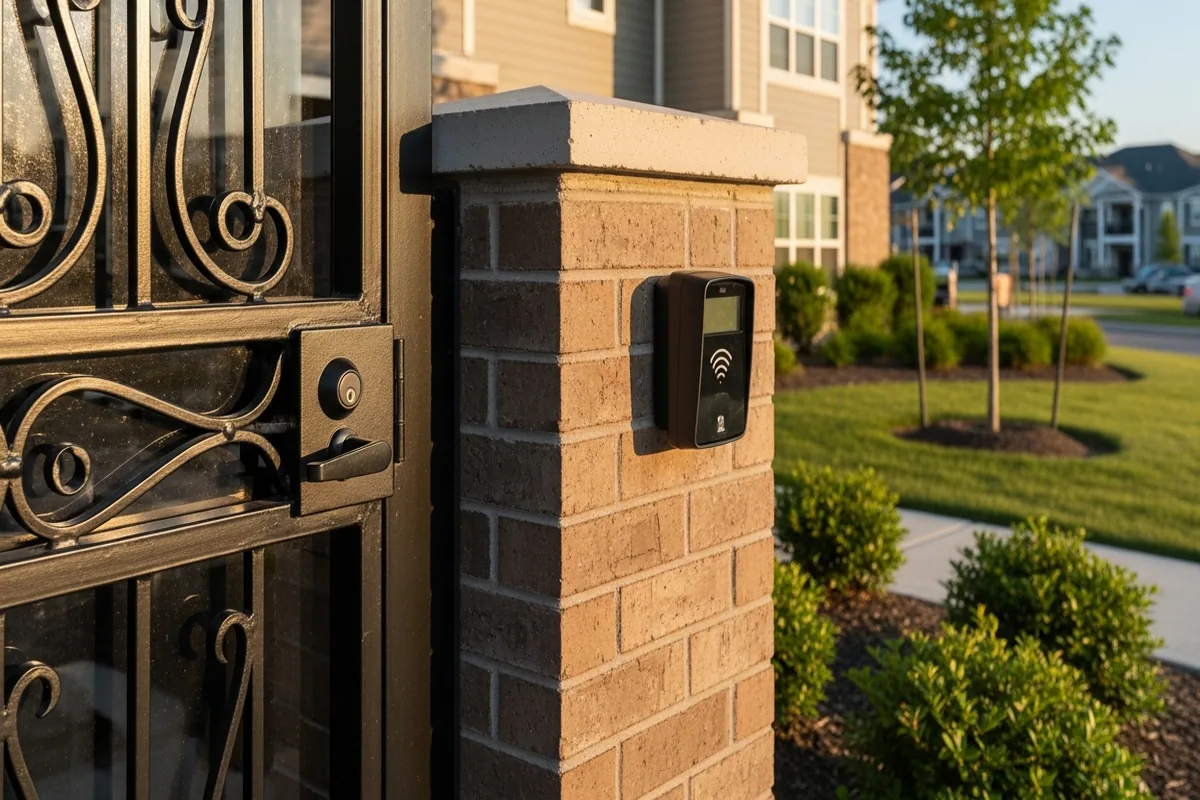
IEI and Linear access control systems use standard 26-bit Wiegand proximity cards — specifically the HID H10301 format — meaning any HID-compatible card programmed to your facility code will work as a direct replacement. American Key Cards supplies compatible clamshell cards and key fobs for IEI and Linear (Nortek Security & Control) installations, with no dealer account required and no minimum order quantity enforced by the OEM distribution channel.
What Are IEI and Linear Proximity Cards?
IEI (Identification Engineering Inc.) and its parent company Linear — both operating under the Nortek Security & Control brand — produce access control panels, readers, and credentials for residential, light commercial, and multi-family housing applications across North America. Their standard proximity cards are 125 kHz passive RFID credentials encoded in the HID H10301 26-bit Wiegand format.
This is not a coincidence or a compatibility claim. Linear actively sources its proximity cards from HID as OEM parts. Part numbers such as 1386LGGMN (HID ISO card, OEM for Linear) and 1586LGGMN (HID composite card, OEM for Linear) appear in Linear’s own product documentation alongside Linear-branded numbers like 0-297401, 0-299106, and 830-00420. The card credential is the same product on the same protocol — only the label differs.
The practical implication: any supplier who produces HID-compatible 26-bit H10301 proximity cards can produce a functional replacement for an IEI or Linear system. You are not locked into Linear’s dealer network for credential reorders.
How to Identify an IEI or Linear Access System
Before ordering, confirm that your system uses standard 125 kHz proximity and not a proprietary format. Here are the most reliable indicators:
- Reader branding. Look for “Linear,” “IEI,” or “Nortek” on the reader housing. Linear ProxCard readers and the IEI 212i are the most common models in residential and light commercial installs.
- Existing card label. OEM part numbers
0-297401,0-297301A,0-299106, or830-0040Cprinted on the card confirm you have a standard Linear 26-bit credential. - Controller model. Linear eMerge Essential, eMerge E3, and most IEI single-door controllers use standard Wiegand 26-bit proximity. If the controller accepts “HID-compatible” cards in its documentation, you have the right system.
If your reader accepts cards but you are unsure of the brand or format, read our guide on how to identify your access card format for a step-by-step walkthrough.
Technical Specifications
The IEI/Linear 26-bit proximity format is technically identical to the HID H10301 standard. Below is a full comparison to help confirm compatibility before you order.
| Specification | IEI / Linear OEM | AKC Compatible Card |
|---|---|---|
| Frequency | 125 kHz | 125 kHz |
| Protocol | HID H10301 26-bit Wiegand | HID H10301 26-bit Wiegand |
| Facility code range | 0–255 | 0–255 |
| Card number range | 0–65,535 | 0–65,535 |
| Read range | Up to 8 inches | Up to 8 inches |
| Encryption | None | None |
| Cloneable | Yes | Yes |
| Sample OEM part numbers | 0-297401, 0-299106, 1386LGGMN | N/A — programmed to your spec |
| Form factors available | Clamshell, ISO PVC | Clamshell, key fob |
The Wiegand data structure is: 1 even parity bit + 8-bit facility code + 16-bit card number + 1 odd parity bit, totaling 26 bits. This is the most common bit format in North American access control and is accepted by virtually every Wiegand-compatible access panel.
Compatible Readers and Controllers
IEI/Linear compatible cards work in any reader or controller that accepts standard Wiegand 26-bit H10301 proximity credentials. The most common hardware in the field includes:
- Linear ProxCard readers (all HID-compatible models)
- IEI 212i and similar combination reader/keypads
- HID 125 kHz proximity readers configured for H10301 output
- Linear eMerge Essential, eMerge E3, and eMerge E8 access control panels
- Nortek / Linear eMerge Elite multi-door access systems
- Any Wiegand 26-bit access panel
This broad compatibility is a defining feature of the H10301 format. If you have a mixed-brand installation — for example, Linear readers wired to a third-party panel — compatible cards will almost certainly work throughout, as long as the panel is configured for standard 26-bit Wiegand input.
OEM Part Numbers and What They Mean
Linear and IEI use a combination of their own part numbers and HID OEM part numbers for the same physical product:
0-297401— Linear standard clamshell proximity card (26-bit)0-299106— Linear clamshell card, alternate run0-297301A— Linear ISO printable proximity card830-00420— Linear key fob credential830-0040C— Linear alternate key fob1386LGGMN— HID ISO card, OEM-labeled for Linear (26-bit H10301)1586LGGMN— HID composite card, OEM-labeled for Linear (26-bit H10301)
If you see any of these on your existing card or in your installer’s paperwork, you are confirmed for standard 26-bit H10301 proximity. Our compatible cards replace all of the above.
Can IEI and Linear Proximity Cards Be Cloned?
Yes, honestly. The IEI/Linear 26-bit H10301 format operates at 125 kHz with no cryptographic protection of any kind. The card data — facility code and card number — is transmitted in plaintext during every read. Commercially available 125 kHz duplicator tools and devices such as the Proxmark3 can read and clone these credentials.
This is not unique to IEI and Linear. It is the inherent limitation of all standard 125 kHz proximity formats, including HID ProxCard II, AWID 26-bit, and similar unencrypted standards. See our AWID 26-bit comparison guide for context on how different proximity formats compare on this point.
If your site requires clone-resistant credentials, the path forward is upgrading to a 13.56 MHz smart card format with mutual authentication and AES encryption — such as MIFARE DESFire EV2/EV3 or HID Seos. Standard Linear eMerge controllers support credential upgrades when paired with multi-technology readers.
For most residential and light commercial applications where the primary risk is lost or stolen cards rather than deliberate cloning attacks, standard 26-bit H10301 remains a practical and cost-effective credential choice. The right response to a lost card is deactivating it in the controller and issuing a new one with a new card number — which is exactly what compatible cards enable you to do quickly and affordably.
Why Compatible Cards Cost Less Than OEM
Linear and IEI distribute their branded credentials through a dealer and integrator channel. That channel adds markup at each step: manufacturer to distributor, distributor to integrator, integrator to end user. For a product that is technologically identical to a commodity 125 kHz H10301 card, those markups are significant.
American Key Cards is compatible by specification, not affiliated with IEI or Linear / Nortek Security & Control. We program 125 kHz H10301 proximity cards to your exact facility code and card number range and ship directly to you — property managers, HOA boards, facilities departments, and building owners — with no minimum order quantity and no dealer account requirement.
The credential you receive performs identically at the reader. The difference is in the label and the price.
What You Need to Place an Order
To order compatible IEI or Linear proximity cards, you need two pieces of information:
-
Facility code — a number from 0 to 255 programmed into your controller. It is often printed on existing card labels. If you cannot locate it, your original installer should have it in their records. The Linear eMerge software also displays it in the credential configuration screen.
-
Card number range — the specific card numbers you want programmed. For a standard replacement order, you would supply the numbers of lost or damaged cards so the new credentials can be enrolled under the same numbers, or a sequential new range if you are expanding your access list.
Once we have these two data points, we program the cards and ship. Cards arrive ready to present to the reader — there is no additional programming required on your end.
Use Cases
IEI and Linear systems appear across a wide range of property types in North America:
- Multi-family residential — apartment complexes and gated communities using Linear eMerge for building entry, amenity access, and parking
- Light commercial — small office buildings, retail, and medical offices using single-door IEI or multi-door Linear controllers
- HOA and gated communities — Linear vehicular gate controllers (often paired with AWID or DKProx-format readers at the gate itself, and HID-format readers at pedestrian doors)
- Schools and churches — affordable single-door IEI access panels are common in small institutional settings
- Storage facilities — Linear eMerge for unit-level access management
Ordering Compatible IEI and Linear Cards
If you have confirmed your system uses standard 26-bit H10301 proximity — or if your existing cards carry any of the OEM part numbers listed above — you are ready to order.
Visit our contact page to submit your facility code, card number range, and quantity. We will confirm compatibility, provide pricing, and ship your programmed cards directly to you. No dealer account, no OEM minimum order, no waiting on a middleman.
Frequently asked questions
Are IEI and Linear proximity cards the same as HID cards?
Yes. IEI and Linear 26-bit proximity credentials use the identical HID H10301 protocol — the same encoding found in HID's 1326 ProxCard II. Linear sources genuine HID OEM cards (such as part numbers 1386LGGMN and 1586LGGMN) for these systems, so any HID-compatible 26-bit card programmed to your facility code is a drop-in replacement.
What information do I need to order Linear or IEI compatible cards?
You need your facility code (a number from 0 to 255) and the card number range you want programmed. The facility code is usually printed on your existing cards or stored in the Linear or IEI access controller's programming. If you are unsure, contact us — we can walk you through finding it.
Will compatible cards work on a Linear eMerge Essential or E3 system?
Yes. Linear eMerge Essential, E3, and similar systems use standard Wiegand 26-bit H10301 proximity readers. Compatible cards programmed to your facility code output the same 26-bit Wiegand data stream and enroll into the eMerge software exactly like OEM cards would.
Can IEI and Linear proximity cards be cloned?
Yes. IEI and Linear systems use the standard HID H10301 125 kHz protocol, which carries no cryptographic protection. Cards can be read and duplicated with commercially available 125 kHz tools. If your site requires clone-resistant credentials, consider upgrading to a 13.56 MHz smart card format such as MIFARE DESFire.