P10SHL Replacement Card: Non-OEM Options That Work
If you manage a Kantech EntraPass system and need to replace a lost or damaged P10SHL card, you have a practical non-OEM option: American Key Cards supplies compatible ioProx clamshell cards pre-programmed to your site code, with no 50-unit minimum order. The P10SHL is Kantech’s standard ISO-sized clamshell proximity credential, operating at 125 kHz and dual-encoded in both Kantech’s proprietary XSF format and standard 26-bit Wiegand — making it one of the most commonly searched Kantech replacement SKUs in North America.
What the P10SHL Is and Why It’s Hard to Reorder
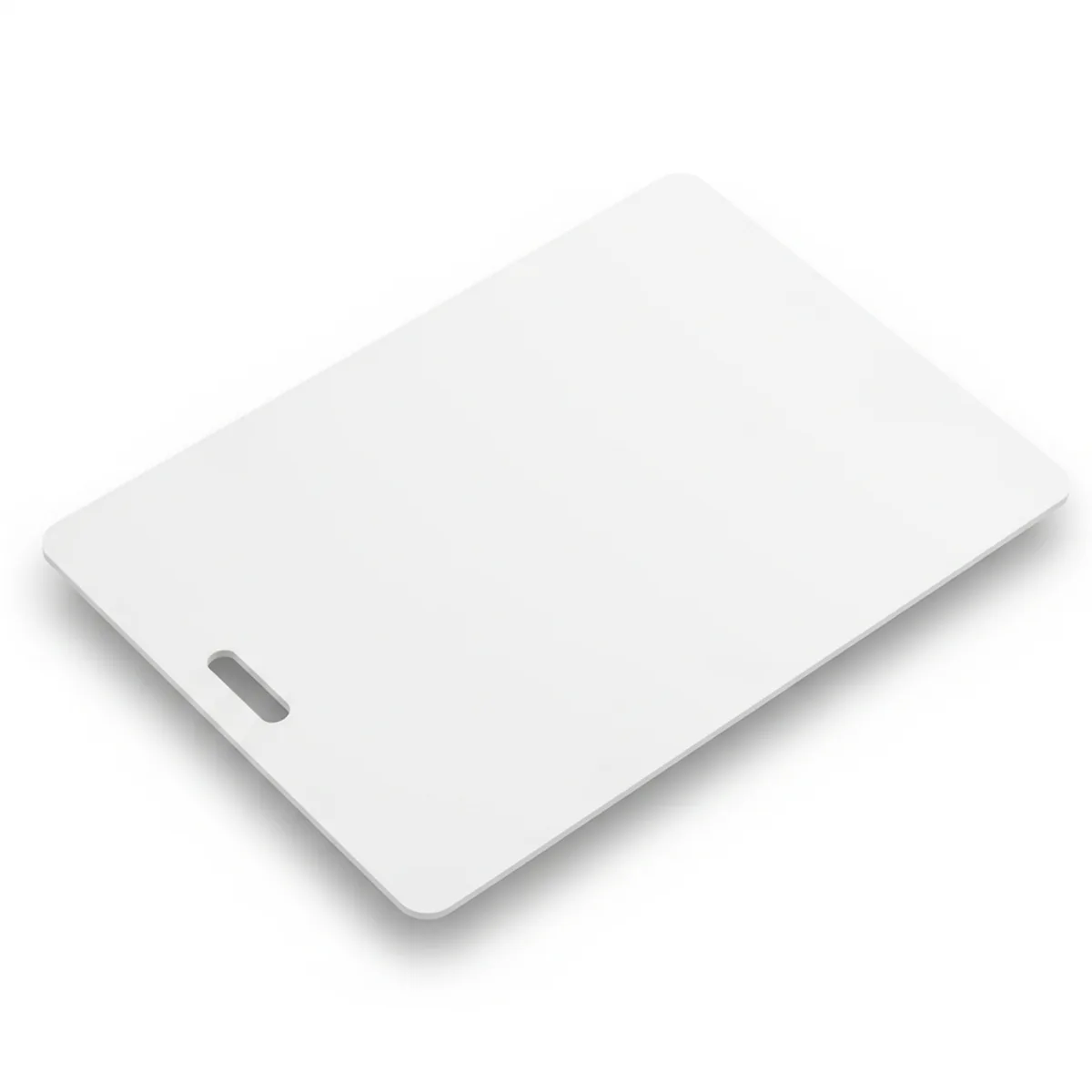
The P10SHL is the flagship clamshell form-factor card in Kantech’s ioProx credential line, sold by Johnson Controls (which acquired Kantech in 2001). It is a non-printable, ISO 85.6 mm × 54 mm card in a white polycarbonate clamshell housing, operating at 125 kHz with dual-format encoding.
The challenge for facilities managers is straightforward: Kantech distributes the P10SHL exclusively through its authorized dealer and distributor network, and those channels impose minimum order quantities — typically 50 units per order. If you need three cards because two employees lost theirs and one card was damaged, you are forced either to pay for 47 cards you do not need or to go through an integrator who will add a markup on top of distributor pricing.
American Key Cards exists specifically to fill this gap. We are not affiliated with Kantech or Johnson Controls; we supply credentials compatible by specification, not by OEM sourcing.
Technical Specifications
The P10SHL encodes two formats on the same chip simultaneously:
- XSF (eXtended Secure Format): Kantech’s proprietary encoding scheme, supporting a 64-bit codebase with over 4 billion unique codes using a Family Code, Facility Code, and Card Number. ioProx readers on EntraPass systems read XSF natively.
- 26-bit Wiegand (H10301): The industry-standard proximity format, with facility codes 1–255 and card numbers 1–65,535. This second encoding allows the same card to read on any Wiegand-compatible panel.
Both encodings are stored on every credential simultaneously — the reader selects the appropriate one based on its configuration.
| Specification | Value |
|---|---|
| OEM Part Number | P10SHL |
| Frequency | 125 kHz |
| Chip | Kantech proprietary ioProx IC (dual-encoded XSF + W26) |
| Bit Formats | XSF (Kantech eXtended Secure Format) / 26-bit Wiegand H10301 |
| Form Factor | ISO clamshell (non-printable) |
| Operating Temperature | -45°C to +70°C |
| Cloneable | Yes (125 kHz, no encryption) |
| AKC Equivalent | AKC ioProx-Compatible Clamshell Card (P10SHL style) |
Compatible Readers
The P10SHL — and our compatible equivalent — reads on the full Kantech ioProx reader family:
- Kantech P225 / P225KP — ioProx mullion reader, read range up to 6.5 inches
- Kantech P325 / P325KPXSF — ioProx single-gang reader, read range up to 8.2 inches
- Kantech P600 — long-range ioProx reader, read range up to 29 inches
Via the 26-bit Wiegand dual-encoding, these cards also read on any standard Wiegand 26-bit reader connected to a compatible access panel, including systems not running EntraPass.
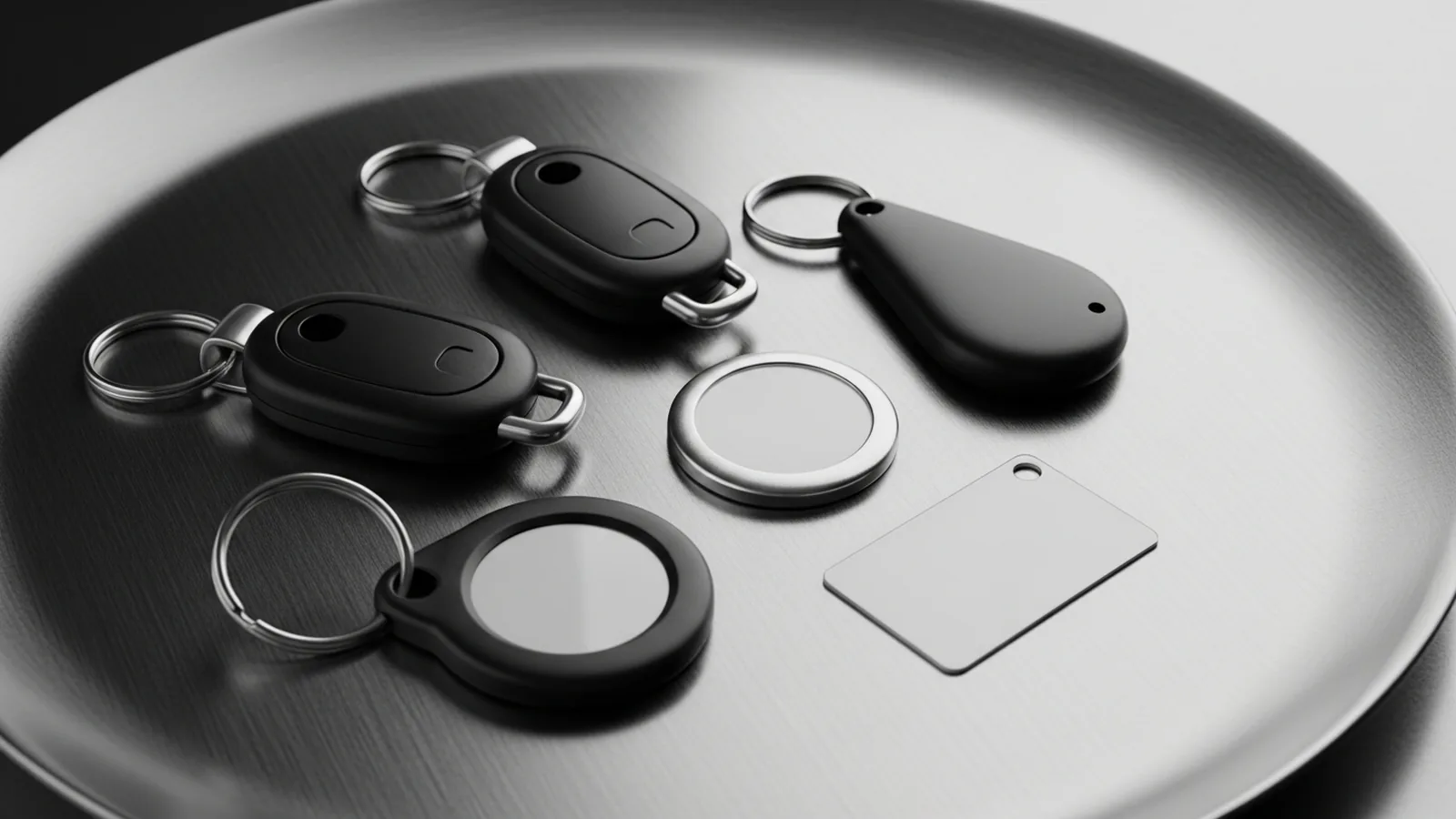
For a full breakdown of the ioProx format family — including the P40KEY fob, P20DYE printable card, and P30DMG composite card variants — see our Kantech ioProx (XSF) format guide.
How to Identify Your Facility Code
Every P10SHL order requires two pieces of information: your facility code (sometimes called site code) and the card number range you want programmed.
The fastest way to find your facility code is to look at an existing working card. Kantech cards typically print the card number on the front face; your facility code is usually in your EntraPass software under the site or controller settings, or in the original system installation documentation. Your facilities manager or the company that originally installed your system should have this on record.
If you have access to the EntraPass interface, navigate to the cardholder record for any active credential — the facility code and card number are displayed there.
Once you have both numbers, contact us with the quantity you need and we will confirm programming details and ship.
OEM vs. Compatible: What You Get and What You Give Up
Compatible does not mean inferior — it means produced to the same specification by a different manufacturer. Here is what changes and what does not:
What stays identical:
- Frequency (125 kHz) and dual-encoding (
XSF+26-bit Wiegand) - Read range on Kantech P225, P325, and P600 readers
- Enrollment behavior in EntraPass (enrolls by card number exactly as the OEM does)
- Ability to mix with existing OEM cards on the same system
What is different:
- The card body is manufactured by our supplier, not Kantech/Johnson Controls
- There is no Kantech or Johnson Controls logo on the card
- Pricing is lower, particularly for small quantities
- No minimum-50 order requirement
There is no technical or functional difference in daily access control use. The reader receives the same XSF or 26-bit data payload either way.
Why Non-OEM Cards Cost Less
Kantech’s authorized distributor channel involves the manufacturer, a distributor, and often an integrator — each adding margin. When you order through that chain, the 50-unit minimum is not about technology; it is about making the paperwork economical for the distributor.
American Key Cards sources compatible blanks directly and programs them to order. The result is lower per-card cost with no minimum quantity requirement. You pay for exactly what you need.
This matters most for:
- Property managers replacing individual lost cards for tenants
- Small businesses adding one or two employees to an existing system
- Facilities teams that need a working card before the next full order cycle
How to Order
- Locate your facility code and the card number range you need programmed.
- Note the reader model at your doors (P225, P325, or P600) — this confirms read range expectations.
- Decide on quantity. We ship single cards through bulk orders.
- Contact American Key Cards with your details. We confirm the encoding, program the cards, and ship.
Cards arrive ready to enroll — present the card to the reader and add the card number in EntraPass or your Wiegand-compatible software just as you would with an OEM P10SHL.
Related Credential Formats
If your building uses a mix of credential types, or if you are evaluating an upgrade, two formats are worth knowing about:
- Kantech ioProx XSF (full format family) — covers all Kantech ioProx SKUs including the
P40KEYfob,P20DYEprintable card, andP30DMGcomposite card - Standard HID 26-bit H10301 — if your building has a mix of Kantech and HID readers, understanding the 26-bit standard helps clarify what is and is not interchangeable
A Note on Security
The P10SHL format operates at 125 kHz with no cryptographic protection. XSF’s broad code space reduces accidental duplication across sites, but it does not prevent electronic copying with commercially available tools like a Proxmark3 or a T5577 blank. For most commercial office buildings, this is an accepted and appropriate security level.
If your environment requires clone-resistant credentials — financial services, healthcare with strict access requirements, or high-security government facilities — Kantech supports 13.56 MHz smart card readers as an upgrade path, and that is the honest recommendation. We will tell you when a format is not appropriate for your use case, not just sell you something.
Ready to order? Contact American Key Cards with your facility code, card number range, and quantity. We will confirm compatibility, quote pricing, and ship programmed cards with no dealer account required and no 50-unit minimum.
Frequently asked questions
Can I buy fewer than 50 P10SHL replacement cards?
Yes. The OEM Kantech P10SHL requires a minimum order of 50 units through an authorized distributor. American Key Cards supplies compatible ioProx clamshell cards in any quantity — single cards included — programmed to your facility code and card number range.
Will a compatible P10SHL card work on my Kantech EntraPass system?
Yes, provided the card is encoded with your system's site code. Our compatible cards carry both XSF and 26-bit Wiegand dual-encoding, exactly as the OEM credential does. The card enrolls in EntraPass the same way as any P10SHL — by card number — and reads on Kantech P225, P325, and P600 readers without any reader or panel changes.
What information do I need to order compatible P10SHL cards?
You need two pieces of data: your facility code (also called site code) and the card number or range you want programmed. Both are available from your existing card labels, your access control software, or your original installer's documentation. If you have an existing working card, we can help you identify the format.
Is the Kantech P10SHL format cloneable or secured?
The P10SHL uses 125 kHz proximity technology with no cryptographic protection. Like all unencrypted 125 kHz credentials, it can be electronically copied with widely available tools such as a Proxmark3. For most commercial office and residential applications this is an accepted risk; if clone resistance is required, Kantech also supports 13.56 MHz smart card readers as an upgrade path.