What Is Wiegand 26-Bit? The Universal Access Card Format Explained
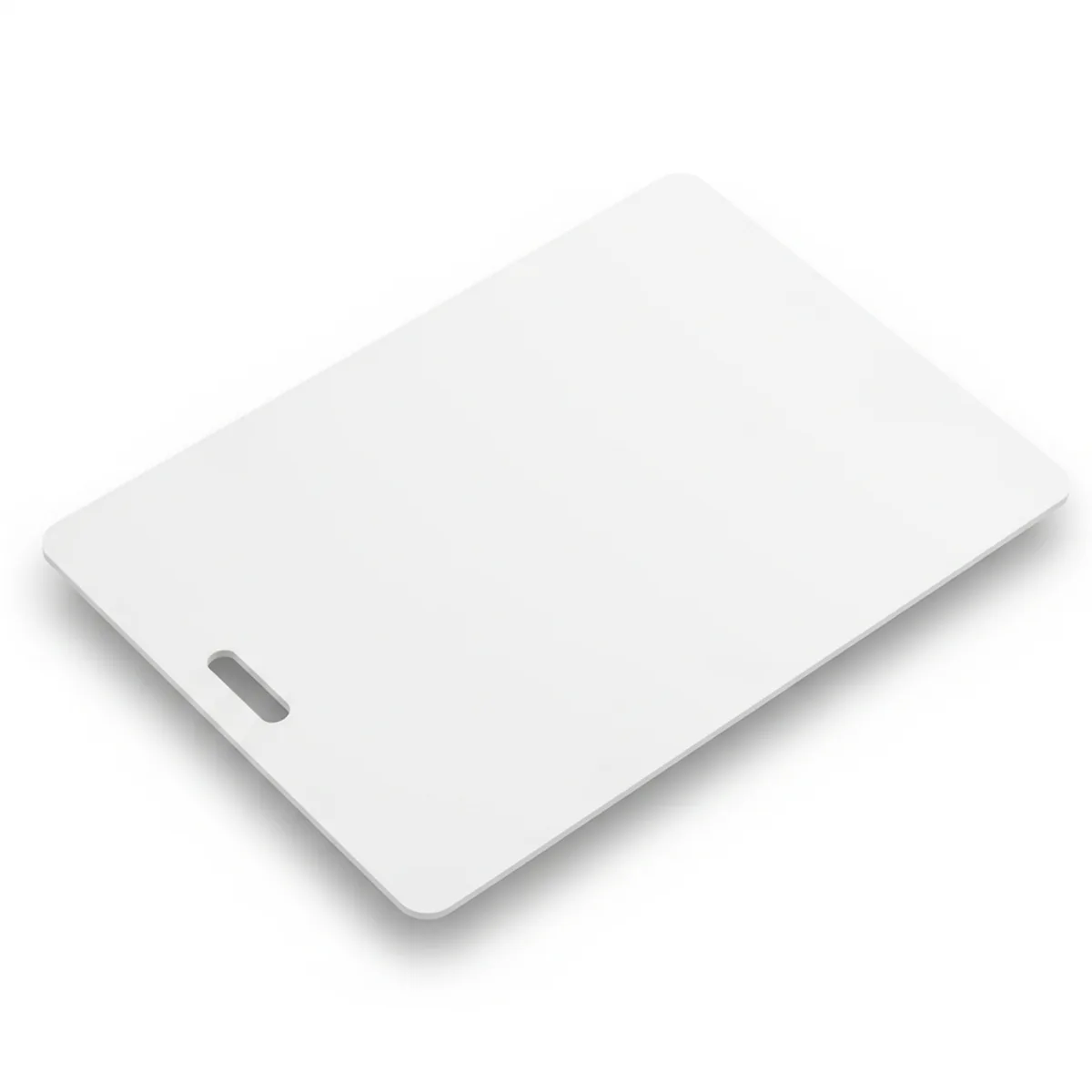
Wiegand 26-bit — formally designated H10301 — is the most common access card format in North America. It encodes an 8-bit facility code and a 16-bit card number into a 26-bit data stream that virtually every proximity reader manufactured in the past four decades understands. American Key Cards supplies compatible H10301 clamshell cards and key fobs programmed to your facility code, ready to enroll in your access system on arrival.
What the “26-Bit” Means, Exactly
The number refers to the total number of bits transmitted from the card to the reader during a credential presentation. Those 26 bits break down as follows:
- Bit 1: Even parity bit (covers bits 2–13)
- Bits 2–9: 8-bit facility code (values 0–255)
- Bits 10–25: 16-bit card number (values 0–65,535)
- Bit 26: Odd parity bit (covers bits 14–25)
The parity bits exist for error detection — the reader checks them to confirm the data arrived without corruption. The access control panel reads the facility code and card number from the Wiegand data stream and compares them against its enrolled credential database.
This structure is simple by design. It was standardized before encryption was a practical consideration, which is exactly why it became universal — every manufacturer could implement it, and readers from different vendors could all speak the same protocol to the same access panel.
The H10301 Designation
H10301 is HID Global’s format code for the standard 26-bit Wiegand layout described above. You will see it printed on cards and listed in system documentation as the format type. Because HID was one of the dominant proximity card suppliers when Wiegand became the industry standard, their format code became the shorthand most installers, integrators, and system administrators use.
HID’s own proximity card product line — including part numbers 1386, 1326, 1346, 1586, 1336, and 1391 — ships in H10301 format by default. Many other manufacturers, including Farpointe Data (PSC-1), Kantech, Continental Access, and dozens more, produce cards that output the same 26-bit H10301 data stream, even though their card bodies and air-interface encodings may differ slightly.
OEM Part Numbers That Use This Format
The following OEM part numbers are commonly associated with standard 26-bit H10301 proximity cards:
| OEM Part Number | Manufacturer | Form Factor |
|---|---|---|
1386 | HID Global | ISO credit-card size |
1326 | HID Global | Clamshell (ProxCard II) |
1346 | HID Global | ISO printable (ISOProx II) |
1586 | HID Global | Composite (DuraCard) |
1391 | HID Global | HID Ultraslim |
PSC-1 | Farpointe Data | Clamshell |
CA3K-C | Continental Access (NAPCO) | Clamshell |
American Key Cards supplies compatible cards programmed to the same H10301 specification — compatible by specification, not affiliated with HID Global or any other OEM listed above.
How to Identify Whether Your System Uses 26-Bit H10301
Several clues tell you that a system is running standard 26-bit H10301:
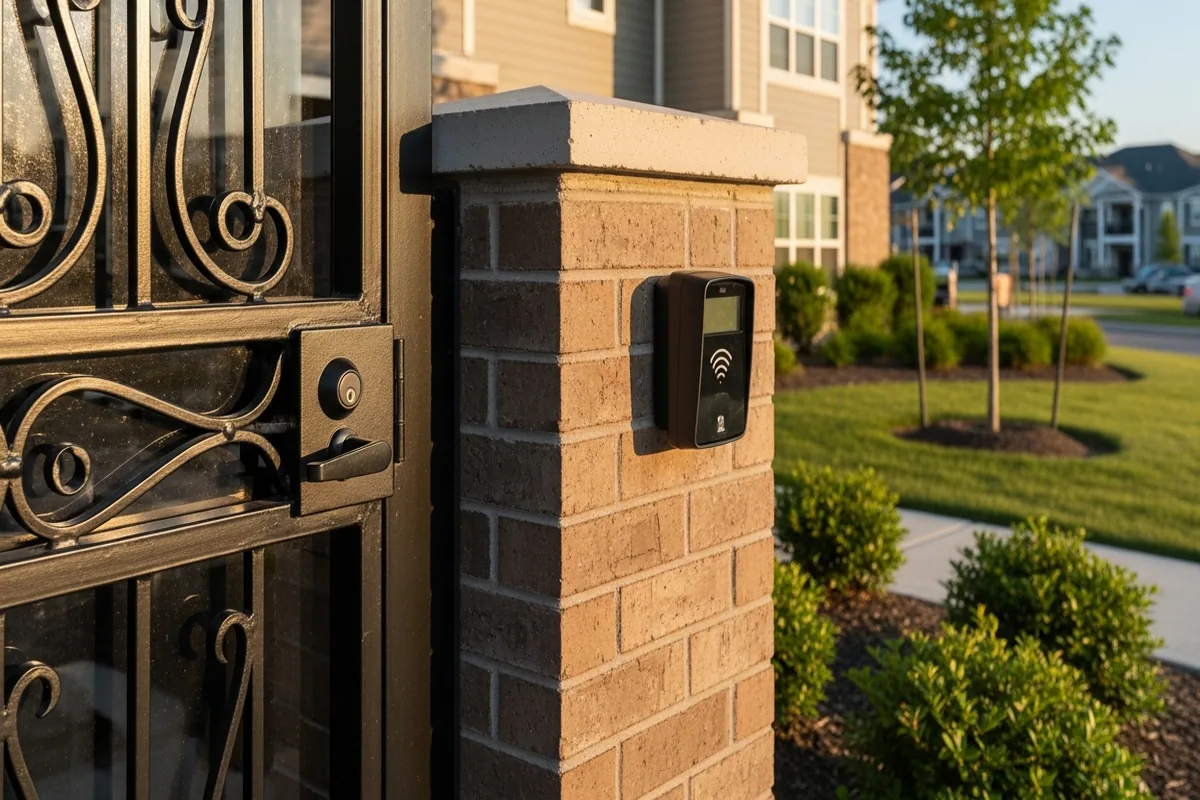
On the reader: Look for HID branding — the HID logo on the reader housing is the most direct indicator. Other brands including LenelS2, Continental Access, Kantech (in standard mode), and Farpointe Pyramid also use H10301-compatible output.
On the card itself: Existing cards often have a printed number sequence on the back. A format similar to FC:123 CN:4567 indicates facility code 123 and card number 4567. Some cards simply show a 5-digit number, which is the card number programmed at the factory.
In the access control software: Virtually every modern access control software platform (Lenel OnGuard, Software House C•CURE, Genetec, Kantech EntraPass) displays the card format when you view an enrolled credential. A field reading 26-bit Wiegand or H10301 confirms the format.
From the installer’s records: The system’s original installation documentation will list the format. If that documentation is unavailable, your access control integrator or the building’s previous property manager may have it.
Compatible Readers
The H10301 26-bit format works with an extraordinarily wide range of readers because it was designed as an open standard. Compatible readers include:
- HID MaxiProx
5375(long-range, vehicular) - HID ProxPro
5355 - HID MiniProx
5365 - HID ProxPoint Plus
6005 - HID ThinLine II
5395 - Virtually all other 125 kHz Wiegand readers from any manufacturer
The key requirement is that the reader and the access control panel must both be configured for 26-bit Wiegand input/output. Most installations that have been running on proximity cards for any significant length of time already meet this requirement.
Common Use Cases
The H10301 format appears across essentially every property type:
- Commercial office buildings — tenant badge access, elevator call, server room entry
- Multi-tenant apartments — building entry, mailroom, amenity spaces
- Parking access — garage gates, surface lot barriers
- Schools and universities — classroom access, dormitory entry, recreation centers
- Hospitals and healthcare facilities — staff access zones, medication rooms
The format’s ubiquity is both its greatest strength and its primary security limitation. Because so many properties use the same format, it is well-understood, well-supported, and easy to source — but also widely studied from a vulnerability standpoint.
Security Reality: What 26-Bit H10301 Does Not Do
It is worth being direct about this. Standard 26-bit H10301 proximity cards carry no cryptographic protection. The facility code and card number are transmitted in the clear every time a card is presented to a reader. A standard 125 kHz handheld duplicator can read and write a clone in a matter of seconds.
For most commercial and residential applications — apartment entry, parking garages, gym access — this level of security is proportionate to the actual risk. For higher-risk environments such as data centers, government facilities, or pharmaceutical storage, the H10301 format is not the right credential.
If your installation requires clone resistance, HID iCLASS SE and Seos smart cards use AES-128 encryption with mutual authentication between card and reader. Those formats cannot be cloned with any commercially available tool, and American Key Cards does not produce equivalents for them — they require the OEM’s secure issuance infrastructure. That is an honest limitation worth understanding before selecting credentials for a new installation.
Why Non-OEM H10301 Cards Cost Less
The H10301 format is an open standard. The data structure is published, and the programming equipment to write H10301 credentials is widely available. American Key Cards programs blank 125 kHz cards to your facility code and card number range using that same established specification — no OEM license, no dealer account, and no minimum order of 50 or 100 units that most OEM distributors enforce.
The access panel receives the same 26-bit Wiegand data stream whether the card came from HID, Farpointe, or American Key Cards. The credential is compatible by specification. The only difference is the price and where you bought it.
Formats with proprietary encryption — such as Indala FlexSecur or AWID’s distinct air-interface encoding — are a different matter. A standard 26-bit H10301 card will not work in an AWID reader even though both are “26-bit” cards, because the radio layer between card and reader differs. If you are uncertain which format your system uses, our format identification guide walks through the diagnostic steps.
What You Need to Order
To order compatible 26-bit H10301 clamshell cards or key fobs from American Key Cards, you need two pieces of information:
- Facility code — a number between 0 and 255
- Card number or range — the specific numbers you want programmed (each card gets a unique number)
Both values should be on the label of an existing card, in your access control software’s credential database, or in the original installation records. If you are not sure where to find them, our guide to locating your facility code covers every common method.
Order Compatible H10301 Cards Direct
Standard 26-bit H10301 is the access card format that works everywhere — and it should be the easiest credential to reorder. Contact American Key Cards with your facility code and card number range, and we will program and ship compatible clamshell cards or key fobs ready for immediate enrollment in your access system.
Frequently asked questions
What does 'Wiegand 26-bit' mean?
Wiegand 26-bit refers to a data format that encodes an 8-bit facility code and a 16-bit card number into a 26-bit data stream transmitted from an access card to a reader. The format is named after the Wiegand signaling protocol and is standardized as H10301. It is the most widely deployed proximity card format in North America.
What is a facility code and why does it matter?
A facility code is an 8-bit number (values 0–255) that identifies a specific site or installation. Every card at a location shares the same facility code. When ordering replacement cards, providing the correct facility code is essential — a card with the wrong facility code will be rejected by the access panel even if the card number is correct.
Can Wiegand 26-bit proximity cards be cloned or duplicated?
Yes. Standard 26-bit proximity cards operate at 125 kHz with no encryption. The facility code and card number are readable by commercially available RFID duplicators. If cloning resistance is a requirement, consider upgrading to HID iCLASS SE or Seos smart card technology — those formats use AES encryption and cannot be cloned.
Are compatible non-OEM Wiegand 26-bit cards as reliable as OEM cards?
Compatible cards programmed to the H10301 specification read identically to OEM cards at the reader level. The access panel receives the same 26-bit data stream regardless of who manufactured the card. American Key Cards programs each card to your exact facility code and card number range before shipment.