LenelS2 OnGuard 36-Bit L11601 Compatible Prox Cards
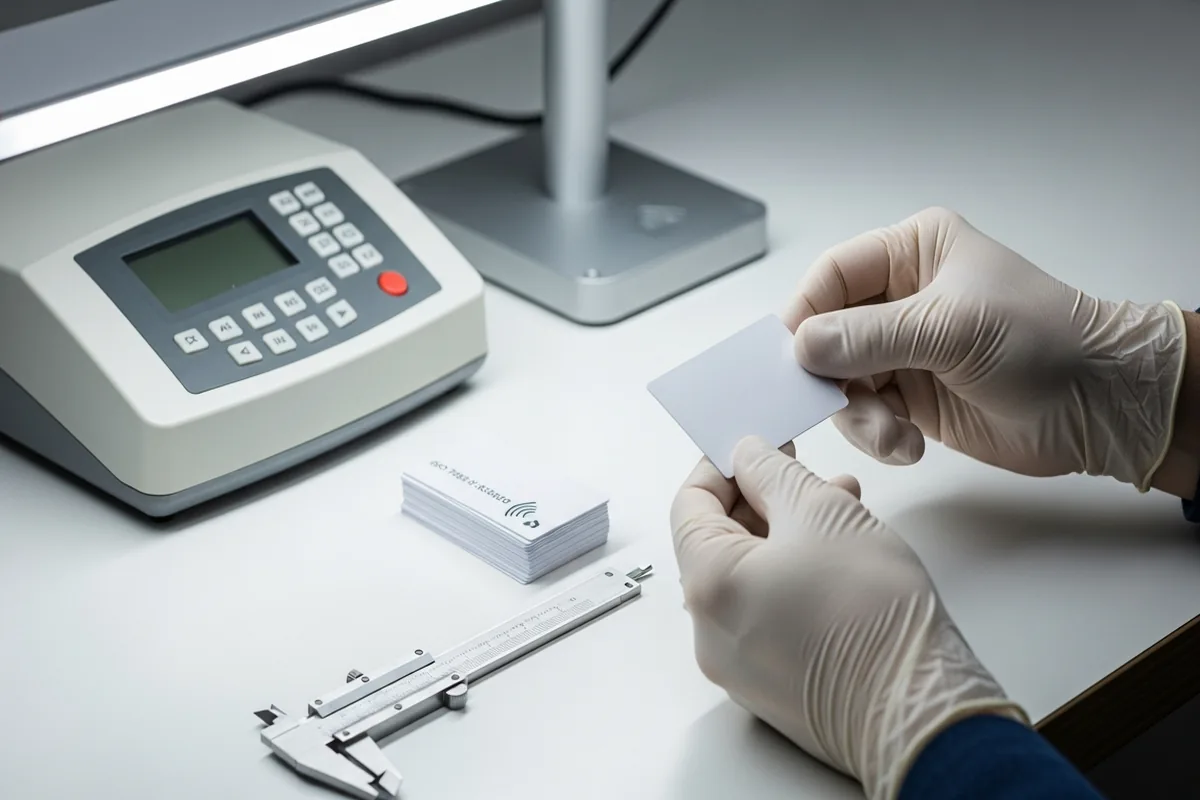
LenelS2 OnGuard is one of the most widely deployed enterprise access control platforms in North America, and it supports multiple credential formats — most commonly standard 26-bit Wiegand and the Lenel-proprietary 36-bit L11601 proximity format. American Key Cards supplies compatible cards and fobs for both formats, programmed to your facility code, without requiring an LenelS2 dealer account or OEM pricing. If your system uses HID iCLASS SE or Seos credentials, those are AES-encrypted formats that no third party can reproduce — but the 125 kHz prox formats covering the majority of the installed base are fully supportable with compatible aftermarket credentials.
Understanding LenelS2 OnGuard Credential Formats
LenelS2 (a Carrier company) produces the OnGuard and NetBox access control platforms used across healthcare campuses, higher education institutions, government facilities, and large commercial real estate portfolios. Because OnGuard has been in deployment for decades, the credential mix it handles is unusually wide:
- Standard 26-bit Wiegand (
H10301) — the open industry format used by dozens of manufacturers; facility code 1-255, card number 1-65,535 - Lenel 36-bit
L11601— a proprietary Lenel format expanding the facility code to 10 bits (0-1,023) and card number to 24 bits (up to 16,777,215) - HID iCLASS 2K/16K — 13.56 MHz smart card format; not cloneable; not available from non-OEM suppliers
- MIFARE Classic / DESFire EV1/EV2 — 13.56 MHz smart card formats; DESFire in particular is secured against third-party reproduction
- PIV and PIV-I — used in federal government deployments; not applicable for commercial aftermarket orders
American Key Cards operates in the 125 kHz prox space: 26-bit H10301 and 36-bit L11601. These are the formats covering the large majority of OnGuard field installations, and they are fully replaceable with compatible aftermarket credentials.
The Lenel 36-Bit L11601 Format: Real Specs
The L11601 designation refers to the Lenel-proprietary 36-bit proximity format. It was developed to address the scalability limits of 26-bit in large enterprise deployments. Here is what the format actually contains:
- Frequency: 125 kHz passive proximity
- Total bit length: 36 bits
- Facility code range: 0-1,023 (10-bit field, vs. 8-bit in 26-bit format)
- Card number range: 0-16,777,215 (24-bit field)
- OEM part numbers:
L11601-series,Identiv 4020 L11601 - Cloneable: Yes — no cryptographic layer on the 125 kHz prox IC
The extended facility code range (up to 1,023) matters for multi-site enterprise deployments where the 26-bit limit of 255 facility codes is insufficient to maintain isolation between buildings or campuses. The card number headroom — over 16 million unique values — eliminates any practical concern about running out of numbers in a single facility.
How to Identify Your Format
Before ordering, confirm which format your OnGuard system is configured for. Wrong-format cards will not read in any reader, even if the card looks identical to what you have now.
From the OnGuard software: The reader port configuration in the OnGuard administration interface lists the expected bit length. A port set to 36-bit will reject 26-bit cards, and vice versa.
From existing card labels: An existing card from the system often has its facility code and card number printed on the label or back surface. If the facility code is above 255 or the card number is above 65,535, the system is using a format wider than 26 bits — almost certainly L11601.
From OEM part numbers on existing cards or purchase records: OEM part numbers in the L11601-series or the Identiv 4020 L11601 indicate the Lenel 36-bit format. HID part numbers 1326 (ProxCard II) or 1386 (ISOProx II) with no additional notation typically indicate standard 26-bit.
From your system integrator: The original installation documentation specifies the bit format programmed into each reader port and credential population. Your integrator or facilities manager should have this on record.
Format Comparison: 26-Bit vs. Lenel 36-Bit L11601
| Attribute | Standard 26-Bit H10301 | Lenel 36-Bit L11601 |
|---|---|---|
| Frequency | 125 kHz | 125 kHz |
| Bit length | 26 bits | 36 bits |
| Facility code range | 1-255 (8-bit) | 0-1,023 (10-bit) |
| Card number range | 1-65,535 (16-bit) | 0-16,777,215 (24-bit) |
| Format type | Open industry standard | Lenel-proprietary |
| OEM part numbers | HID 1326, HID 1386 | L11601-series, Identiv 4020 L11601 |
| Cloneable | Yes | Yes |
| Available from AKC | Yes | Yes |
| Compatible readers | Any Wiegand 26-bit reader | OnGuard readers configured for 36-bit; any 36-bit Wiegand panel |
Both formats operate on identical 125 kHz passive proximity hardware — the difference is entirely in what is encoded on the chip at production. Neither format provides cryptographic protection. If your security requirements call for credential encryption, the LenelS2-compatible path is HID iCLASS SE or Seos, neither of which American Key Cards or any other non-OEM supplier can reproduce.
Compatible Readers for LenelS2 Credentials
LenelS2 panels work with a broad range of reader hardware, all accepting Wiegand input at either 26-bit or 36-bit depending on port configuration in OnGuard:
- LenelS2
LNL-1300/LNL-1320— intelligent dual-reader interface boards; support 26-bit and extended Wiegand formats - HID MaxiProx / ProxPoint — common on Lenel-managed panels in 26-bit Wiegand mode
- HID iCLASS R10/R15/R40 — the prox layer reads 125 kHz credentials including 26-bit and 36-bit on Lenel panels
- Identiv uTrust TS — multi-technology readers common on newer Lenel installations
A reader port in OnGuard is configured to expect a specific bit length. A 36-bit port will ignore 26-bit card data, and a 26-bit port will reject a 36-bit card. Confirm the port configuration before ordering.
Use Cases: Who Runs LenelS2 with 36-Bit L11601 Cards?
The 36-bit L11601 format is most common in installations where the standard 26-bit format’s ceiling became a practical constraint:
- Large enterprise campuses with cardholder counts above 65,535 or more than 255 distinct building populations needing separate facility codes
- Healthcare systems with multiple hospital and clinic locations requiring distinct facility codes per site
- Higher education institutions managing tens of thousands of students, faculty, and staff across multiple buildings
- Government and government-adjacent facilities where security specifications require longer bit formats
Standard 26-bit H10301 remains far more common in the overall LenelS2 installed base, particularly in buildings originally installed before the need for extended card ranges arose. Many OnGuard deployments run mixed populations — 26-bit cards in older reader groups and 36-bit in newer expansions on the same panel.
Why Aftermarket LenelS2 Cards Cost Less
OEM LenelS2 credentials flow through a dealer and distributor channel built for security integrators. For routine credential replacement — lost badges, new employee onboarding, tenant turnover — that channel adds markup at multiple steps and moves slowly.
American Key Cards is not affiliated with LenelS2, Carrier, or Honeywell. We produce cards and fobs compatible by specification: the same frequency, the same bit format, the same facility code encoded, the same Wiegand output to your panel. For 125 kHz prox formats (H10301 and L11601), there is no technical difference between an OEM card and a correctly programmed compatible card in normal operation.
For related formats, see the HID iCLASS SE format guide for encrypted smart card context, and the standard HID 26-bit H10301 guide if your Lenel panel runs in 26-bit mode.
Ordering LenelS2-Compatible Cards from American Key Cards
To order, you need to confirm two things before anything else: the bit format your reader ports are configured for, and your facility code.
For 26-bit H10301 orders: facility code (1-255), card number range, quantity, and form factor (ISO clamshell card or key fob).
For 36-bit L11601 orders: facility code (0-1,023), card number range, confirmation that your OnGuard reader ports are configured for 36-bit Wiegand, quantity, and form factor.
We program each batch to your exact specification and ship ready for enrollment in your OnGuard or NetBox system. If you are unsure whether your system uses 26-bit or 36-bit, send us a photo of an existing card label or your OnGuard port configuration and we can advise before you order.
Full format details for the LenelS2 credential lineup are at /card-formats/lenel-s2/.
To request a quote or ask a format question, contact American Key Cards at /contact/. We typically respond within one business day and can assist with mixed-format campus ordering where multiple Wiegand formats are active on the same panel.
Frequently asked questions
What is the Lenel 36-bit L11601 format and how is it different from standard 26-bit?
The 36-bit L11601 is a proprietary 125 kHz proximity format developed specifically for Lenel systems. It extends the facility code field to 10 bits — supporting values from 0 to 1,023 — and the card number field to 24 bits. Standard 26-bit H10301 cards top out at facility code 255 and card number 65,535. Organizations with larger cardholder populations or multiple sites often move to 36-bit to avoid card number exhaustion or facility-code collisions.
How do I know whether my LenelS2 system uses 26-bit or 36-bit L11601 cards?
Check the bit format configured on each reader port in your OnGuard software. The port settings will specify either 26-bit Wiegand or 36-bit Wiegand. You can also read the card number label on an existing card — a card number above 65,535 or a facility code above 255 definitively indicates a format wider than 26 bits. Your original system integrator documentation or the cards themselves (OEM part number `L11601-series` or `Identiv 4020 L11601`) are also reliable indicators.
Can LenelS2 proximity cards be cloned?
Standard 125 kHz proximity credentials — both the 26-bit H10301 and the Lenel 36-bit L11601 — operate without any cryptographic layer on the card and can be duplicated with commercially available RFID tools. HID iCLASS SE and Seos credentials used on some LenelS2 installations are substantially more resistant to cloning; those formats are not reproducible by American Key Cards or any other third party.
What information do I need to order LenelS2-compatible cards from American Key Cards?
For 26-bit orders: your facility code (1-255) and the card number range you want programmed. For Lenel 36-bit L11601 orders: your facility code (0-1,023), the card number range, and confirmation that your OnGuard system is configured for 36-bit Wiegand on the relevant reader ports. Quantity, form factor (ISO card or key fob), and any print or encoding options complete the order.